
Different sources answer different questions
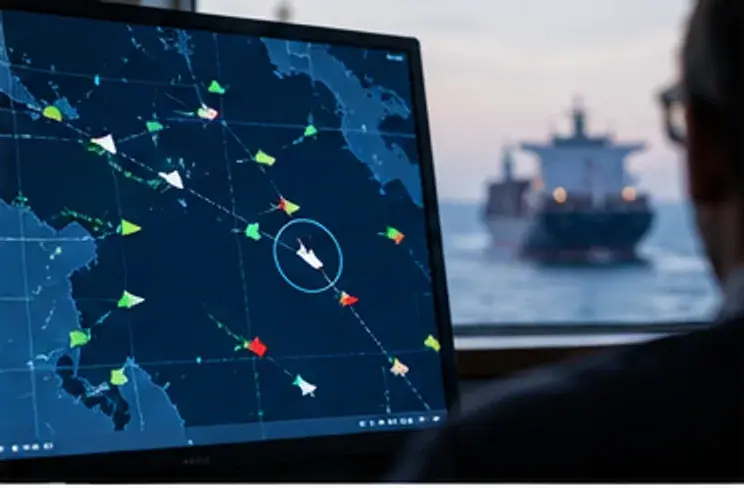
AIS messages, machinery sensors, noon reports, weather feeds, and maintenance records each describe a different part of maritime activity. They may have different update rates, units, time zones, quality controls, and gaps. Combining them requires careful alignment: a timestamp mismatch or incorrect equipment identifier can create a pattern that never happened in reality.
AIS is a navigation and tracking data source, not a complete ground truth about a vessel's operational state. Coverage, transmission issues, data processing, and spoofing or errors can affect what a dataset contains. For consequential analysis, compare multiple trusted sources and understand how each was collected.
Build a data-quality checklist
Before modeling, check missing values, duplicate records, units, sensor calibration, timestamps, vessel identifiers, and whether labels were recorded consistently. Ask who can access the data and whether it contains personal, commercially sensitive, or security-relevant information. Data minimization and access controls should be part of the design, not a late-stage patch.
A transparent baseline—such as a chart, rule, or simple statistical summary—can reveal whether a model adds useful information. Keep a record of preprocessing decisions. If the input pipeline changes, performance may change too.