
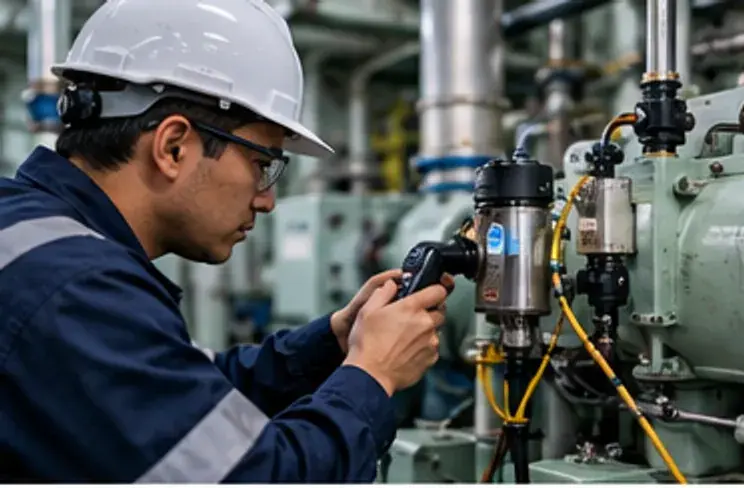
From maintenance records to condition insight
Predictive maintenance uses equipment condition information to estimate whether a component may need attention. On a vessel, candidate inputs might include temperature, vibration, pressure, running hours, alarms, inspection notes, and maintenance history. The data must be associated with the right equipment and time period; otherwise, even a sophisticated model can learn misleading patterns.
A practical first step is often not a machine-learning model. Teams can check whether sensor readings are calibrated, maintenance records are consistent, and known failure events are labeled in a useful way. Simple trend charts and thresholds can help reveal data gaps before a more complex approach is considered.
Use predictions as prompts to investigate
A risk score is not proof that a part will fail. False alarms can waste time, while missed warnings can create a dangerous sense of security. Model performance also depends on the equipment, operating profile, data coverage, and the cost of different errors. A model trained on one vessel or engine type may not transfer reliably to another.
Treat an alert as a reason for a qualified person to inspect evidence through approved maintenance processes. Record the model version, input data, uncertainty, review decision, and eventual outcome so the system can be evaluated over time. Never let an unvalidated prediction replace manufacturer instructions, the safety management system, or professional judgment.