
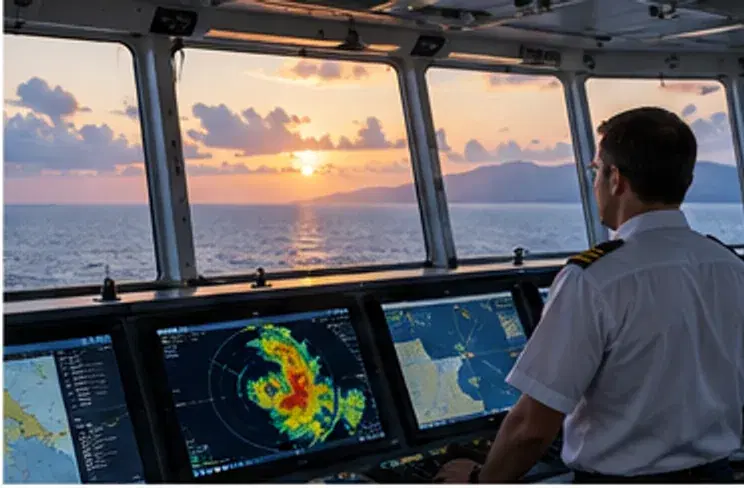
A route is a decision under changing conditions
Voyage planning can involve weather, sea state, vessel characteristics, schedules, fuel use, traffic, port windows, cargo needs, and safety constraints. Decision-support software can compare candidate routes or speeds against selected objectives. The output is only as useful as its data freshness, constraints, and assumptions.
Weather forecasts are uncertain and evolve as new observations arrive. A tool might estimate a lower-consumption option under one forecast while a different route is preferred when safety margins, schedule changes, or operational constraints are considered. Teams should understand the objective being optimized and the trade-offs the system does not represent.
Keep the master and approved procedures in control
A route recommendation is not a navigational authority. Use official charts, approved passage-planning processes, current notices and forecasts, company requirements, and professional judgment. Review the model's data source, update time, uncertainty, and behavior when information is unavailable.
When assessing a routing tool, test realistic scenarios and document who reviews recommendations, how changes are recorded, and what happens if the software fails. Never rely on an AI-generated route as a substitute for navigational practice or the master's authority.